

The Man Who Named a World: Amerigo Vespucci and the Idea of America
He did not discover the New World, and he never asked to have it named after him. But a Florentine merchant’s insistence that the lands across the Atlantic were something entirely new changed how Europe understood the planet.

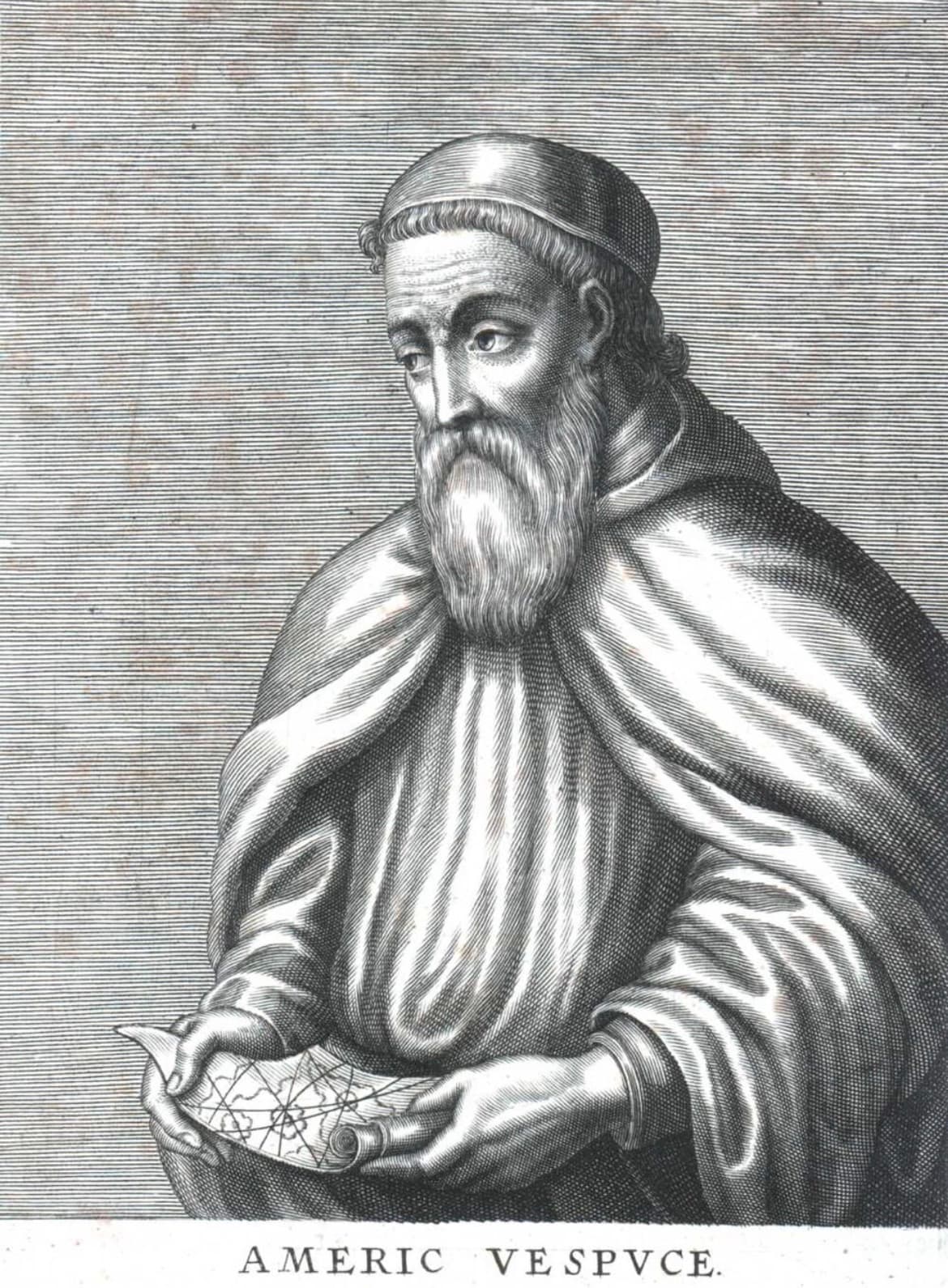
Every day, hundreds of millions of people say his name without thinking of him. Amerigo Vespucci, a Florentine navigator who died more than five centuries ago, gave two continents their name — not by planting a flag or conquering a kingdom, but by making an argument.
That argument was simple and, in its time, radical: the lands Christopher Columbus had reached across the Atlantic were not the edge of Asia. They were a new world.
A Florentine Education
Vespucci was born in Florence in 1454, into a well-connected family in a city at the height of the Renaissance. Florence was home to bankers, artists and scholars, and the Vespucci household moved among them. The young Amerigo studied Latin and geography under his uncle, a Dominican friar and humanist scholar, and grew up in a culture that prized ancient learning even as it was beginning to question it.
He did not begin as an explorer. Vespucci went to work for the Medici, serving a branch of the family headed by Lorenzo di Pierfrancesco de’ Medici. The job was commercial rather than adventurous: managing accounts, trading goods and handling the business affairs of one of Europe’s most influential financial dynasties.
In the early 1490s, his work took him to Seville, which was fast becoming Spain’s gateway to the Atlantic. There Vespucci worked in a business that helped provision ships, including expeditions connected to Columbus. He was positioned at the exact point where money, maps and ambition met.
Across the Atlantic
By the end of the decade, Vespucci was no longer content to outfit voyages. He wanted to join them.
Historians still debate exactly how many voyages he made, because some of the letters attributed to him are of uncertain authorship. But scholars broadly agree that he sailed with a Spanish expedition in 1499 that reached the northern coast of South America, and with a Portuguese expedition in 1501 that traveled far down the coast of what is now Brazil.
That second voyage changed his thinking. As the ships followed the coastline south for hundreds of miles, Vespucci concluded that this vast landmass could not be part of Asia. It was too large, stretched too far south and matched nothing described by the ancient geographers.
Columbus, by contrast, maintained to the end of his life that he had reached the outskirts of Asia.
“A New World”
Vespucci’s observations reached Europe through letters, and one of them became a sensation. Published around 1503 under the Latin title Mundus Novus — “New World” — it described a land unknown to the ancients, filled with peoples, animals and landscapes Europeans had never imagined. It was reprinted again and again across the continent, making Vespucci one of the most widely read travel writers of his age.
More from Amerigo
Latest stories
Culture
‘Primetime’ Turns Chris Hansen Into the Villain — and Sacrifices Accuracy Along the Way
A24’s Primetime wants audiences to reconsider Chris Hansen and the television phenomenon that made him famous.

Culture
AI Is Changing Hacking — and the Next Cyberattack May Move at Machine Speed
Artificial intelligence is rapidly reshaping cybersecurity, giving defenders powerful new tools while raising fears that hackers could automate parts of attacks that once required significant time and expertise.

Music · Music
Rod Stewart Prepares to Leave the Road After a Remarkable Six-Decade Career
After more than six decades of raspy vocals, stadium performances and songs that became fixtures of popular music, Sir Rod Stewart is preparing to say goodbye to life on the road. But the legendary British singer insists he is not finished with music.