The Greatness of Napoleon Bonaparte: Conqueror, Reformer, and Architect of Modern Europe
Napoleon Bonaparte (1769–1821) stands as one of history’s most extraordinary figures—a military genius, visionary statesman, and transformative leader whose impact continues to resonate more than two centuries after his death.

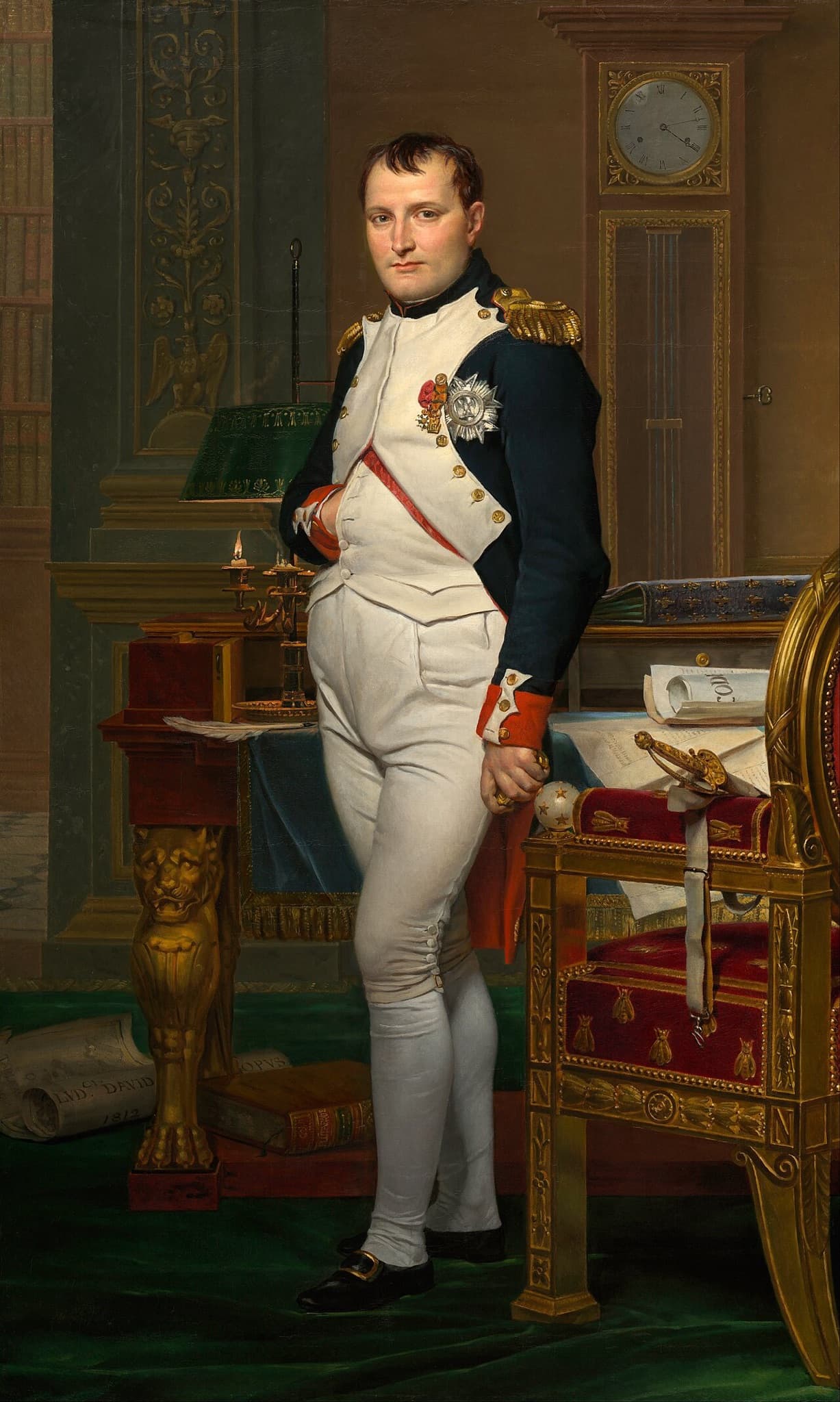
Napoleon Bonaparte (1769–1821) stands as one of history’s most extraordinary figures—a military genius, visionary statesman, and transformative leader whose impact continues to resonate more than two centuries after his death. Rising from modest Corsican origins to become Emperor of the French, he embodied ambition, strategic brilliance, and administrative innovation. While his wars brought devastation, his achievements in law, governance, education, and military science reshaped France, Europe, and the world.
Humble Beginnings and Meteoric Rise
Born on August 15, 1769, in Ajaccio, Corsica, to a family of minor Italian nobility, Napoleon received a French military education. He excelled in artillery and mathematics, graduating from the École Militaire in Paris. The French Revolution (1789–1799) provided the chaos and opportunity he needed. At just 24, he gained fame for his role in the Siege of Toulon (1793), where his artillery tactics helped recapture the city from British and royalist forces.
By 1796, as commander of the Army of Italy, Napoleon demonstrated his genius. Facing larger Austrian and allied forces, he used rapid maneuvers, division of enemy armies, and exploitation of terrain to win a string of victories. The Italian Campaign (1796–1797) made him a national hero, leading to the Treaty of Campo Formio, which expanded French territory. His Egyptian expedition (1798–1799), though militarily mixed, advanced scholarship with the discovery of the Rosetta Stone.
In 1799, he orchestrated the Coup of 18 Brumaire, becoming First Consul and effectively ruler of France. In 1804, he crowned himself Emperor Napoleon I in Notre-Dame Cathedral, a bold act symbolizing his self-made destiny.
Military Genius: Master of Warfare
Napoleon is widely regarded as one of the greatest military commanders in history. His tactics—emphasizing speed, mobility, corps system organization, and decisive battles—are still studied in military academies today. He fought over 60 battles and won most, often against coalitions of major powers.
Key triumphs include:
• Battle of Austerlitz (1805): Often called his masterpiece, Napoleon defeated a larger Russo-Austrian force through brilliant deception and timing, securing French dominance in Central Europe.
• Battles of Jena-Auerstedt (1806): Crushed Prussian armies, showcasing his ability to coordinate multiple corps.
• Earlier wins like Marengo (1800) and the Italian campaigns highlighted his operational brilliance.
He revolutionized warfare with the Grande Armée, professionalizing forces, promoting based on merit, and integrating artillery effectively. His campaigns spread French revolutionary ideals—liberty, equality, and nationalism—while redrawing Europe’s map.
Enduring Reforms: The Foundation of Modern Institutions
Napoleon’s greatness extended far beyond the battlefield. He stabilized post-revolutionary France through pragmatic reforms that outlasted his empire.
The Napoleonic Code (Code Civil, 1804): His most significant civilian achievement streamlined chaotic laws into a clear, uniform system. It emphasized equality before the law (for men), protection of property rights, secularism, and the abolition of feudal privileges. This code influenced legal systems in over 120 countries, including parts of Latin America, the Middle East, and even Louisiana in the United States.
Other reforms included:
• Reorganizing education with lycées and centralized universities.
• Establishing the Banque de France for financial stability.
• Creating a merit-based civil service and the Légion d’Honneur.
• Concordat of 1801, reconciling the state with the Catholic Church.
• Infrastructure projects, metric system promotion, and support for science and arts.
He emancipated Jews in many territories, abolished the Spanish Inquisition in conquered areas, and advanced administrative centralization—building institutions that underpin modern France and much of Europe.
Legacy: A Complex Colossus
Napoleon’s empire at its peak controlled much of continental Europe, from Spain to Poland. His conquests accelerated the decline of feudalism, spurred nationalism, and fostered nation-state development. The Louisiana Purchase (1803) doubled U.S. territory, indirectly shaping American history.
Defeats in Russia (1812) and at Waterloo (1815) led to exile on Saint Helena, where he died in 1821, likely of stomach cancer. Yet his legend grew. His remains were returned to Paris in 1840 with great honor.
Critics rightly note the human cost of his wars—millions dead—and elements of authoritarianism. However, his drive to meritocracy, legal modernity, and European integration mark him as a bridge from the old regime to the contemporary world. As historian Andrew Roberts noted, he was both destroyer and creator.
Napoleon’s life proves that one individual, through intellect, will, and vision, can profoundly alter history’s course. From Corsica to emperor, his story inspires as a testament to human potential and the enduring power of bold ideas. In law, strategy, and governance, the greatness of Napoleon Bonaparte endures.
More from Amerigo
Latest storiesAmerica · The Day in America
Chaos, Cash, and Cruise Missiles – America’s Wild Wednesday
In the grand American tradition of never doing anything halfway, Wednesday, June 10, 2026, delivered a perfect storm of geopolitical fireworks, pocketbook panic, border politics, billionaire drama, and basketball bedlam.
Music · New Music
Toni Todaro Finds Liberation on “Libertad”
For Toni Todaro, “Libertad” is more than the title of a new single pack. It is a declaration of arrival.

Interviews · The Amerigo Interview
Blood On Blonde - Amerigo Interviews
Blood On Blonde in conversation with Amerigo Magazine. Listen to the full interview.