

The Music Industry’s 2026 Reckoning: Streaming Saturation, AI Floods, Ticket Gouging, and the Squeeze on Real Artists
The numbers look good on paper. Global recorded music revenues climbed again in 2025, hitting around $31-39 billion depending on the source, with streaming still driving the bulk and paid subscriptions adding tens of millions of users.

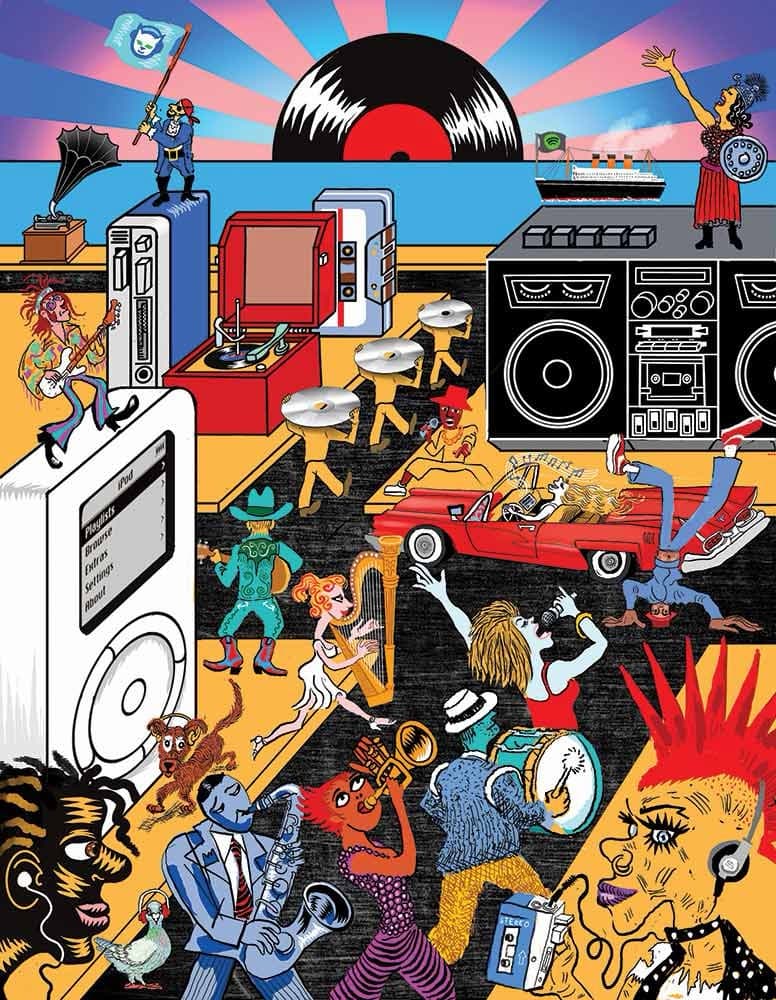
The numbers look good on paper. Global recorded music revenues climbed again in 2025, hitting around $31-39 billion depending on the source, with streaming still driving the bulk and paid subscriptions adding tens of millions of users. Vinyl keeps its stubborn comeback. Yet beneath the surface, the industry feels like it’s in a slow-motion downward spiral for anyone not in the superstar tier or backed by major labels. Artists are burned out, independents are drowning in noise, live shows have become luxury experiences, and AI is flooding platforms with synthetic slop. What was supposed to be the streaming utopia has hardened into a winner-take-most machine that’s exhausting creators and frustrating fans.
Streaming’s Broken Promise
Spotify, Apple Music, and the rest were hailed as saviors after the piracy-ravaged 2000s. They’ve delivered growth—streaming now accounts for the vast majority of revenues—but the economics remain punishing. Payouts per stream are microscopic for most, and the long tail gets thinner every year. Subscriber growth is flattening in mature markets, average revenue per user is under pressure, and discovery algorithms favor the already huge. Independent artists release thousands of tracks daily into a sea of content, only for the platforms’ own AI tools to help sort through it—often sidelining human creators.
Worse, streaming fraud is a billion-dollar black hole, with sophisticated actors inflating numbers and siphoning royalties. Industry leaders are calling for zero tolerance, but the damage is done: real money and attention diverted from working musicians. Many mid-tier acts report that even solid streaming numbers barely cover costs after splits with distributors and labels. The “fan economy” push—merch, direct sales, expanded rights—is helping labels, but for independents without that infrastructure, it’s grind or quit.
AI: The Great Devaluation
Artificial intelligence has crossed a tipping point. Tools like Suno and Udio generate tracks that rack up millions of streams, sometimes sneaking onto charts while mimicking human styles so well listeners can’t tell. Lawsuits from majors rage on, some partnerships are forming, but the flood continues: abundance breeds saturation, which tanks perceived value. Human artists who pour years into craft now compete with infinite, low-effort output. Many fear a future where “content” replaces art, pushing more creators out entirely.
For producers, engineers, songwriters, and session players, it’s existential. AI lowers barriers so anyone (or nothing) can “make” music, shrinking opportunities in studios and sync licensing. The result? A clearer divide: superstars and those who adapt to the new tools thrive or survive; everyone else steps back or pivots to day jobs. Neurodivergent artists, veterans, and those without massive social media machines feel the exhaustion most acutely after years of algorithm-chasing.
More from Amerigo
Latest stories
Film
U.S. Military Planning Around Cuba Raises Questions About Washington’s Next Move
WASHINGTON — The United States military is taking additional steps to prepare for the possibility of action involving Cuba, according to new reporting, as the Trump administration intensifies its campaign of economic and political pressure against the…

Culture
McDonald’s Is Betting Billions on an A.I.-Powered Future
CHICAGO — For decades, the machinery behind a McDonald’s restaurant was relatively easy to recognize: grills, fryers, cash registers and drive-through headsets.

America · Crime